
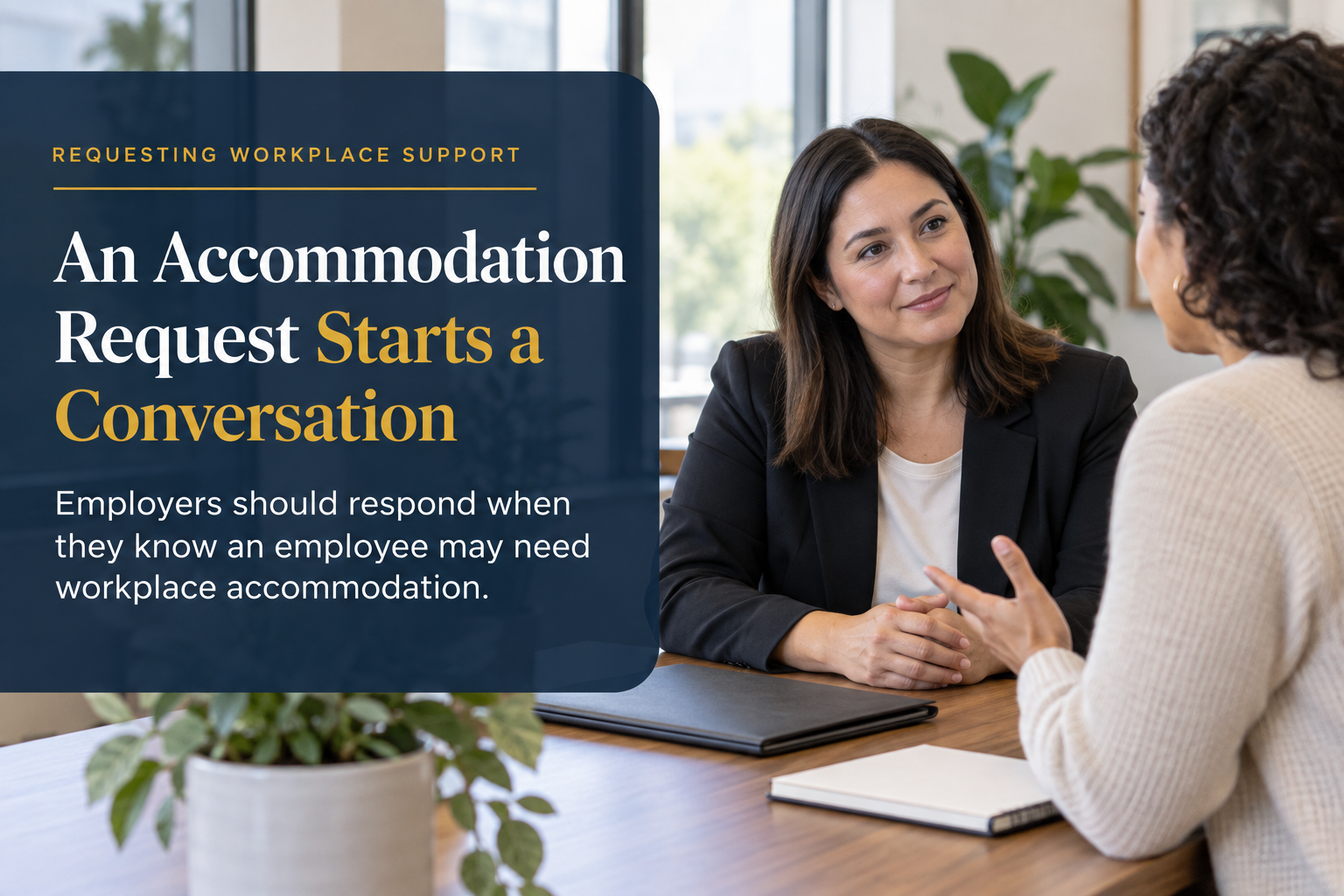
If you told your employer you needed help because of a medical condition, disability, injury, pregnancy-related condition, mental health condition, or work restriction, your employer may have had a legal duty to do more than simply say “no.” In California, employers generally must engage in a timely, good-faith interactive process to determine whether an effective reasonable accommodation is available.
The interactive process is supposed to be a real conversation—not a paperwork trap, not a delay tactic, and not a way to push an employee out. When an employer ignores a doctor’s note, refuses to discuss restrictions, denies leave without considering alternatives, or fires an employee instead of exploring accommodations, that may violate California law.

Under California’s Fair Employment and Housing Act, it is an unlawful employment practice for an employer to fail to engage in a timely, good-faith interactive process with an employee or applicant to determine effective reasonable accommodations, if any, in response to a request for accommodation by a person with a known physical disability, mental disability, or medical condition.
In plain English: once your employer knows you may need an accommodation, it generally cannot ignore you, automatically deny the request, demand unnecessary hoops, or fire you without first engaging in a meaningful discussion about possible accommodations.
The interactive process is a cooperative, individualized discussion between the employer and employee about the employee’s limitations, the essential functions of the job, and possible accommodations that may allow the employee to perform the job or remain employed.
The California Civil Rights Department explains that the point of the process is to remove barriers that prevent people from performing jobs they could perform with accommodation. The process requires an individualized assessment of the job and the person’s physical or mental limitations that relate to the need for accommodation.
California interactive process requirements are addressed in FEHA regulations, including 2 CCR § 11069. When an interactive process is needed to identify or implement an effective reasonable accommodation, the regulation requires timely, good-faith communication and an exchange of essential information without unnecessary delay or obstruction. An employer may need to begin the process after an employee requests accommodation or when the employer otherwise becomes aware of a possible need. The process should focus on the employee’s limitations, essential job functions, and accommodations that may be effective.
The duty can begin when an employee or applicant requests a reasonable accommodation. But the employee does not always need to use formal legal language. A request may be enough if it puts the employer on notice that the employee needs a change at work because of a medical condition, disability, or limitation.
The employer may also need to initiate the process when it becomes aware of a possible need for accommodation through observation, a third party, medical documentation, or the employee’s exhaustion of leave benefits while still needing accommodation.
A timely, good-faith interactive process means the employer should respond promptly, communicate honestly, consider available options, request only reasonable medical information when needed, and avoid unnecessary delay. The employer should not treat the process as a box-checking exercise.
A reasonable accommodation is a change to the job, workplace, schedule, policies, or work environment that allows a qualified employee with a disability or medical condition to perform the essential functions of the job, unless the accommodation would create an undue hardship for the employer.
Not necessarily. The employer does not always have to provide the employee’s preferred accommodation if another effective reasonable accommodation is available. But the employer cannot simply reject the request and end the conversation. If the requested accommodation is not feasible, the employer should explore alternatives through the interactive process.
In many cases, an employer may request reasonable medical documentation to confirm the existence of a disability or medical condition and the need for accommodation, especially when the need is not obvious. But the request should be limited to information necessary to evaluate the accommodation. Employers generally should not demand unlimited access to private medical history.
Employees should be careful to provide documentation that clearly identifies work restrictions, functional limitations, expected duration if known, and potential accommodations—without oversharing unnecessary private medical details.
If your employer ignored an accommodation request, rejected medical restrictions without meaningful discussion, required a full-duty release, repeatedly delayed the process, or punished you after requesting help, an interactive process lawyer can review whether the employer complied with California FEHA requirements. The Ghol Firm evaluates issues involving failure to engage in the interactive process, reasonable accommodation, workplace retaliation, and termination. Relevant evidence may include doctor’s notes, accommodation requests, HR communications, job descriptions, work restrictions, and the employer’s responses.
An employee provides restrictions, but the employer never responds, never discusses options, and later disciplines the employee for not performing tasks the doctor restricted.
An employer tells the employee they cannot return unless they are 100% healed, instead of considering whether restrictions can be accommodated.
An employer fires an employee as soon as protected leave ends, without considering whether additional leave or another accommodation would be reasonable.
An employer says restrictions cannot be accommodated but does not explain why, review essential functions, or consider alternatives.
An employer repeatedly asks for new forms or unnecessary information while the employee remains unpaid or is pushed out.
If the employee cannot perform the current job even with accommodation, reassignment to a vacant position may need to be considered.
An employer cannot use the interactive process as a shield for retaliation or discrimination. If the employer fires an employee because the employee requested accommodation, provided restrictions, took medical leave, or disclosed a disability, that may support claims for disability discrimination, failure to accommodate, failure to engage in the interactive process, retaliation, and wrongful termination.
The facts matter. An employer may argue that termination was based on performance, attendance, restructuring, or business needs. But if the timing is suspicious, the employer ignored restrictions, failed to discuss accommodations, or changed its explanation, those facts may support the employee’s case.
The Ghol Firm helps employees in Beverly Hills, Los Angeles, and throughout California understand their rights when an employer fails to engage in the interactive process or properly evaluate a reasonable accommodation. If your employer ignored medical restrictions, refused to discuss workable accommodations, required you to return without restrictions, or retaliated after an accommodation request, The Ghol Firm can review the circumstances and explain potential options under California employment law. Our Beverly Hills office serves workers facing interactive process, disability accommodation, retaliation, and related workplace disputes.
If your employer failed to engage in the interactive process, contact The Ghol Firm for a free consultation. No fees unless we win.