
Many caregivers are told the same thing: “You can sleep during the overnight shift, so we do not have to pay you for those hours.” That is not always true.
In California, caregivers, home care workers, personal attendants, and live-in domestic workers may be entitled to pay for overnight hours, interrupted sleep, on-call time, and long shifts. The rules can be confusing because different standards may apply depending on whether the worker is a personal attendant, a live-in domestic worker, a non-live-in caregiver, an agency employee, or a worker in a residential care facility.
But the basic point is simple: an employer cannot automatically erase eight hours from a caregiver’s paycheck just because the shift includes nighttime or because the caregiver was allowed to lie down.

Caregiver sleep time may need to be paid if the caregiver is on duty, on call, required to remain on the premises, frequently interrupted, not provided adequate sleeping facilities, does not receive enough uninterrupted sleep, or does not have a valid agreement allowing sleep time to be excluded. For many California caregivers, especially those working 24-hour shifts or live-in assignments, sleep-time deductions are only allowed if strict conditions are met.
If you worked overnight shifts and your employer deducted sleep time automatically, paid a flat daily rate, paid only room and board, or failed to pay overtime, you may have been underpaid.
Caregiver work does not always stop at night. A caregiver may need to help a client use the restroom, prevent falls, administer medication, respond to confusion, monitor breathing, assist with mobility, change bedding, reposition the client, or respond to emergencies. Even when the caregiver is technically allowed to sleep, the caregiver may still be under the employer’s control.
That is why sleep-time cases often turn on what actually happened during the shift—not just what the employer’s handbook, contract, or payroll system says.
California caregiver rights may apply to many types of workers, including:
The exact rules may depend on the setting, duties, employer, and whether the caregiver is classified as a personal attendant, domestic worker, facility employee, or another category. Misclassification is common.
A major issue in caregiver cases is whether the worker is a “personal attendant.” Personal attendants generally provide supervision, companionship, and assistance with daily living activities. But if the worker spends too much time on general housekeeping, medical tasks, or other non-attendant duties, the employer’s classification may be challenged.
This matters because different overtime and wage-order rules may apply. Employers sometimes label workers as personal attendants to avoid stronger wage protections, even when the actual duties do not fit the label.
Under California’s Domestic Worker Bill of Rights, covered personal attendants are generally entitled to overtime at 1.5 times their regular rate of pay for hours worked over 9 hours in a day or over 45 hours in a week.
Other caregivers may be entitled to different overtime protections depending on whether they are live-in domestic workers, non-live-in domestic workers, agency employees, or facility employees. For example, caregivers in certain residential care facilities may be subject to rules that require overtime after 8 hours in a day or 40 hours in a week.
Employers often try to deduct sleep time from 24-hour or live-in caregiver shifts. But a sleep-time deduction is not automatic. Depending on the applicable law, the employer generally must satisfy conditions such as:
If the employer simply deducts eight hours every night without checking whether the caregiver actually slept, whether sleep was interrupted, or whether the caregiver had proper sleeping accommodations, that may be unlawful.
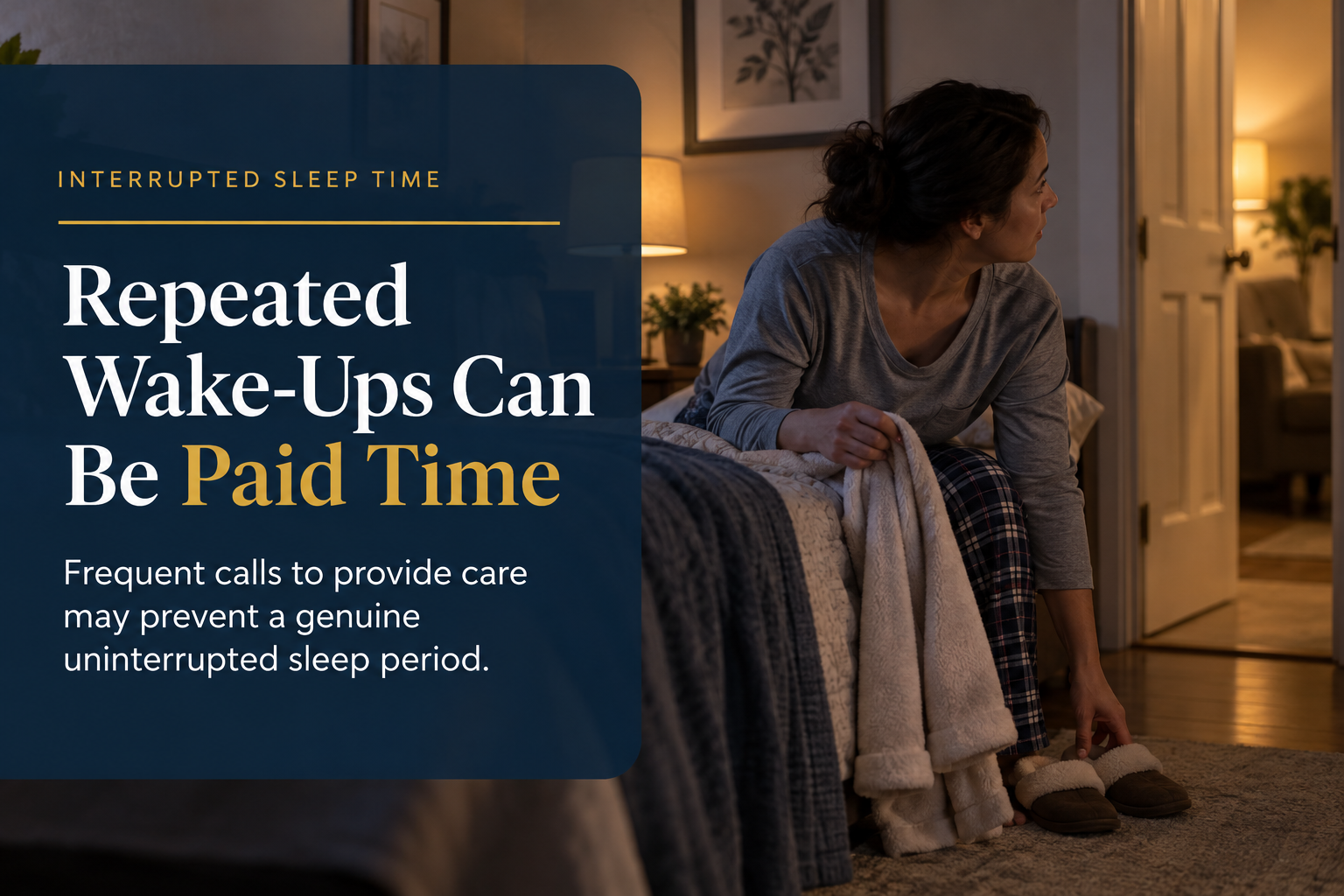
A caregiver’s sleep period may need to be paid if the caregiver is interrupted by work. In many overnight care situations, interruptions are not rare—they are the reason the caregiver is there.
If interruptions prevent the caregiver from receiving the required amount of uninterrupted sleep, the employer may not be allowed to exclude the sleep period from paid hours.
Even if a caregiver is allowed to rest, the time may still be compensable if the caregiver is under the employer’s control. If the caregiver must remain on the premises, respond immediately, cannot leave, cannot use the time freely, or is there primarily for the client’s benefit, the time may count as hours worked.
California courts have recognized that on-call time can be compensable when the employer exercises significant control over the employee’s activities. For caregivers, the question is often practical: could you actually leave, sleep uninterrupted, and use the time as your own—or were you still responsible for the client?
Many caregivers are paid a flat amount per day or per week. A flat rate may sound simple, but it can hide serious wage violations if it does not cover all hours worked, minimum wage, overtime, sleep interruptions, and other legally required pay.
For example, a caregiver working around-the-clock for several days may be told the job pays a set daily rate. But if the caregiver is on duty, on call, frequently interrupted, or working overtime hours, the employer may owe more than the flat rate.
Caregivers are often misclassified as independent contractors. But calling someone a contractor does not make it true. If the employer controls the caregiver’s schedule, duties, client assignments, rules, pay, and working conditions, the caregiver may actually be an employee entitled to wage protections.
Misclassification can affect overtime, minimum wage, wage statements, meal/rest break rights, payroll taxes, workers’ compensation, and other protections.
If you worked as a caregiver and were not paid for overnight hours, sleep interruptions, 24-hour shifts, or overtime, contact The Ghol Firm for a free consultation. No fees unless we win.