
Off-the-clock work in California occurs when a non-exempt employee performs job-related duties but that time is not recorded or paid. It can happen before a shift, after clocking out, during an unpaid meal period, or while answering work emails and messages from home.
California employers generally must pay employees for work they knew or should have known was being performed. An employer cannot simply accept the benefit of that work and leave the time off the paycheck.
California wage-and-hour rules focus on the time an employee is working or is suffered or permitted to work. An employer’s knowledge matters: if management knows or reasonably should know that an employee is performing work, the time may be compensable even when it was not entered on a timecard.
This is why an employer’s written “no unauthorized overtime” policy does not automatically eliminate its obligation to pay for work actually performed.
Off-the-clock violations are not limited to employees being explicitly told, “Clock out, but keep working.”
Common examples include employees arriving early to open a store, boot up computer systems, prepare equipment, or set up a workstation before clocking in. Staying late to clean, complete paperwork, close a register, or finish reports after clocking out may create the same issue.
The Ghol Firm’s existing service page also identifies working through lunches, after-hours communications, mandatory training, travel between job sites, and automatic deductions as common forms of uncompensated work.
They can.
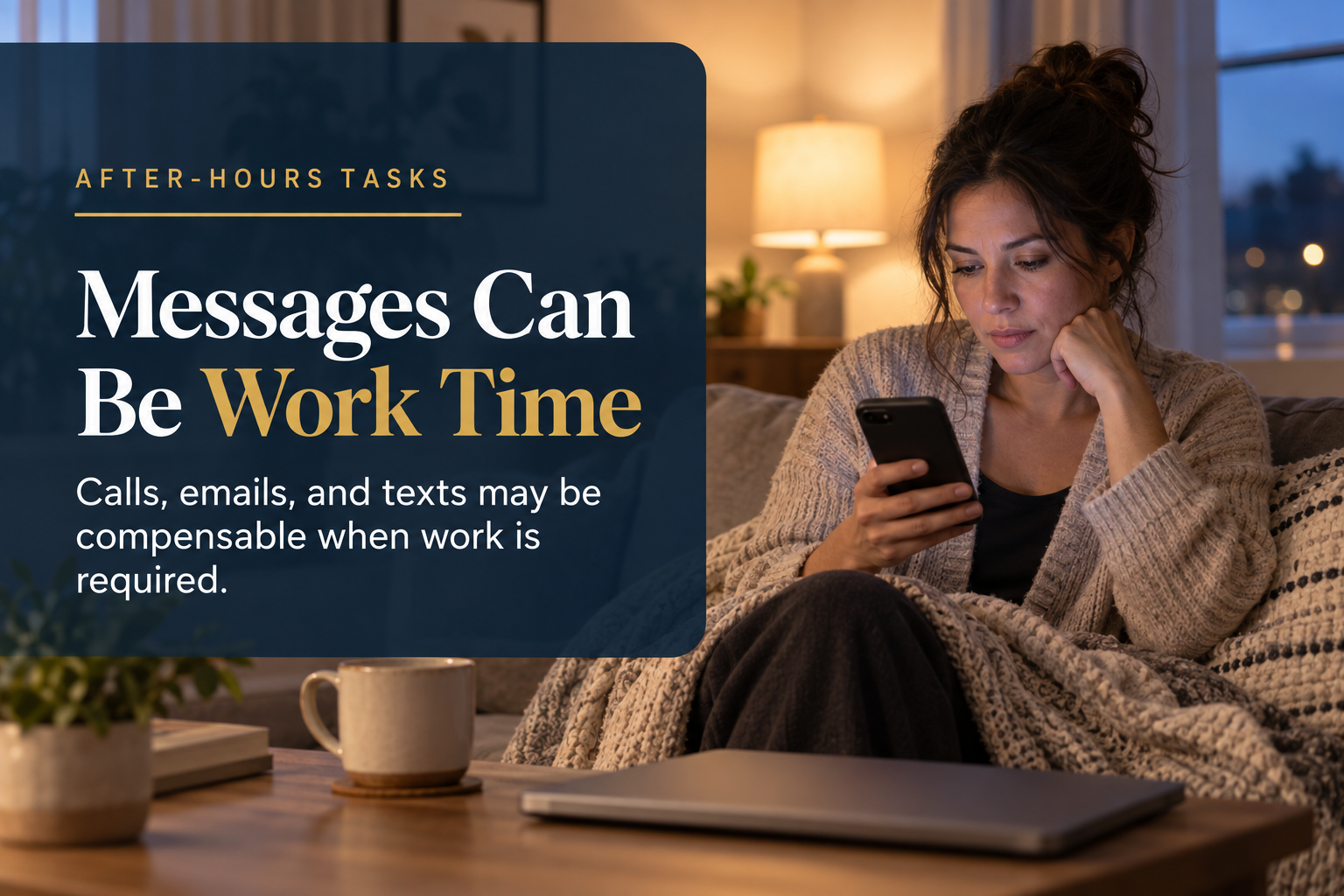
A quick message from a supervisor may seem insignificant, but repeatedly reading instructions, responding to customers, checking schedules, submitting reports, or participating in Slack, Teams, email, or text conversations after clocking out can create unpaid work time.
This issue has become especially important for employees who use phones and remote-work systems outside scheduled hours. Recent California employment-law coverage specifically identifies recurring after-hours emails, texts, calls, and app use as potential compensable work.
Digital activity can also create evidence through timestamps, login history, sent messages, VPN records, and other electronic records.
Requiring an employee to clock out and continue performing duties is a classic off-the-clock problem.
For example, a restaurant employee may clock out at the scheduled end of a shift but still be required to clean, restock, or close the workplace. A retail employee may be told to clock out before finishing a register count.
California DIR expressly identifies requiring off-the-clock work as wage theft.
The issue is not whether the employee was technically punched into the payroll system. The question is whether compensable work was actually being performed.
Automatic meal deductions can become problematic when the payroll system subtracts meal time even though the employee continued working.
For example, an employee may lose 30 minutes of pay automatically while still answering phones, helping customers, monitoring equipment, or responding to a supervisor.
California DLSE guidance explains that when an employer knows or has reason to know an employee is working during a meal period, compensation is owed for the time worked, including overtime when applicable.
A manager may correct a genuine timekeeping error, but changing records to reduce time actually worked can create serious wage issues.
Potential timecard violations include moving a clock-in time forward, changing a clock-out time backward, deleting overtime, adding a meal period that was not taken, or telling an employee to record fewer hours than actually worked.
Employees who notice changed punches should compare screenshots or copies of their time records against schedules, messages, computer activity, and their own records.
Unauthorized does not necessarily mean unpaid.
California’s Labor Commissioner states that an employer must pay overtime whether authorized or not when the employee was suffering or permitted to work. The employer may discipline someone for violating a legitimate authorization policy, but it must still pay for compensable time it knew or should have known was worked.
This distinction is especially important when managers routinely see employees working past scheduled hours but later claim the overtime was never approved.
Recurring small amounts of work should not automatically be dismissed.
In Troester v. Starbucks, the California Supreme Court rejected applying the federal de minimis doctrine to regularly recurring post-shift work lasting several minutes. The court left open whether exceptionally brief or irregular activities could present different circumstances.
Five or ten unpaid minutes each day can become significant when repeated across months or years.
Yes. Missing work time can affect more than straight-time wages.
Suppose your timecard shows eight hours but you actually worked 30 additional minutes closing the workplace. Those extra minutes may push you into California daily overtime.
California generally requires qualifying non-exempt employees to receive overtime for work beyond eight hours in a workday or 40 hours in a workweek, with additional double-time rules in certain situations.
Useful off-the-clock work evidence may include pay stubs, timecards, schedules, emails, text messages, Slack or Teams messages, computer login records, phone logs, security-badge records, customer records, and coworkers who observed the work.
Keep a dated record of when you actually started and stopped working and compare it with what appears on your wage statements.
The Ghol Firm’s service page specifically identifies time logs, pay stubs, emails, text messages, and digital records as potential evidence of unpaid work.
If significant time is missing, an off-the-clock work lawyer can evaluate the recorded hours, actual work performed, employer knowledge, overtime impact, and available documentation.
California employee rights attorneys at The Ghol Firm represent workers from the firm’s Beverly Hills office who believe they were not paid for all hours worked.
Off-the-clock work in California can include pre-shift preparation, post-shift duties, after-hours emails, work performed during unpaid meal periods, unauthorized overtime, and time removed from an employee’s timecard.
The central issues are whether work was performed, whether the employer knew or should have known about it, and whether that time appeared on the employee’s paycheck. Employees who suspect missing hours should preserve their schedules, time records, messages, pay stubs, and other digital evidence.
California employers generally must compensate non-exempt employees for compensable work they knew or should have known was being performed.
Potentially, yes. If answering emails, messages, or calls is work performed for the employer, that time may be compensable.
An employer can enforce an overtime-approval policy, but California generally still requires payment for overtime the employer knew or should have known was worked.
An automatic system does not excuse unpaid work. If the employer knows or has reason to know you worked during the deducted meal period, compensation may be owed for that time.
Other evidence may help establish the work, including messages, schedules, computer logins, badge records, phone records, witnesses, and your own contemporaneous notes.
If you reported illegal conduct and were fired, demoted, written up, suspended, or pressured to resign, contact The Ghol Firm for a free consultation. No fees unless we win.