
When Are Sales Commissions Considered Earned in California?

When Are Sales Commissions Considered Earned in California? A sales commission is generally considered earned in California when the employee satisfies the conditions required by the applicable commission agreement. Depending on the plan, that might occur when a customer signs a contract, the sale closes, a product is delivered, or the customer pays. Once a […]
How Are Missed Meal and Rest Breaks Paid in California?

How Are Missed Meal and Rest Breaks Paid in California? When a California employer fails to provide a legally compliant meal or rest period, a covered employee may be owed one additional hour of pay at the employee’s regular rate of compensation for that workday. Meal-period and rest-period violations are treated as separate categories, so […]
What Is Off-the-Clock Work in California?

What Is Off-the-Clock Work in California? Off-the-clock work in California occurs when a non-exempt employee performs job-related duties but that time is not recorded or paid. It can happen before a shift, after clocking out, during an unpaid meal period, or while answering work emails and messages from home. California employers generally must pay employees […]
How Is Overtime Calculated With Bonuses and Commissions?

How Is Overtime Calculated With Bonuses and Commissions? California overtime is not always calculated from an employee’s base hourly wage. For non-exempt employees, certain commissions, nondiscretionary bonuses, incentive payments, and other compensation may increase the regular rate of pay used to calculate overtime. This means an employee earning $20 per hour may have an overtime […]
Can Salaried Employees Receive Overtime in California?

Can Salaried Employees Receive Overtime in California? Yes. Salaried employees can receive overtime in California when they are non-exempt or incorrectly classified as exempt. A salary is only a payment method; it does not automatically remove overtime rights. California looks at salary level, how the employee is paid, and the work actually performed. Does a […]
How to Know If Your Employer Owes You Unpaid Wages
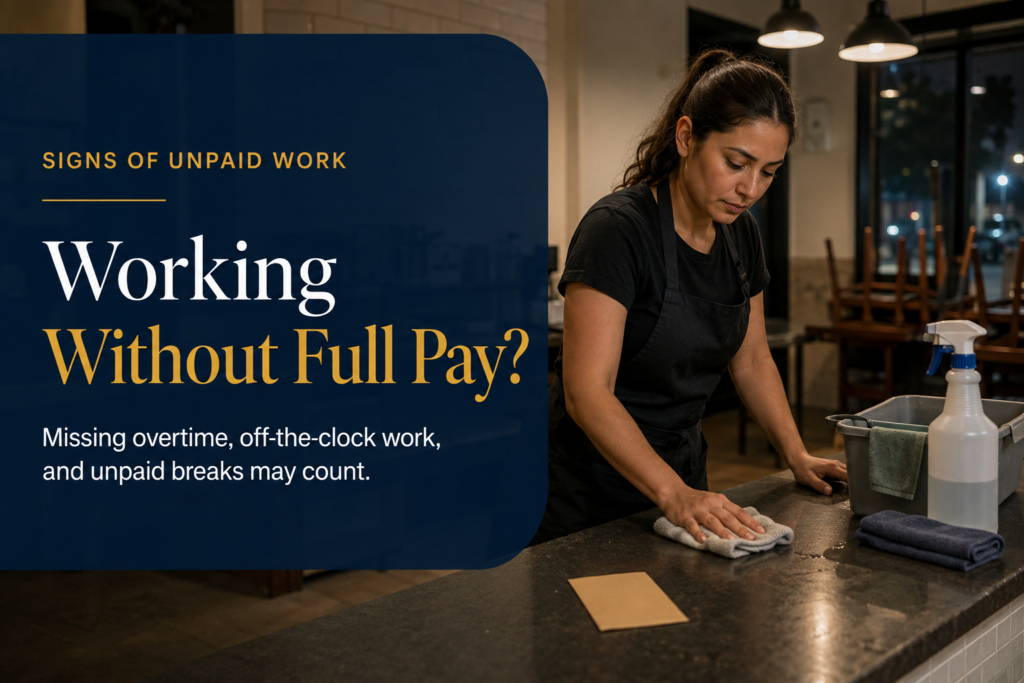
How to Know If Your Employer Owes You Unpaid Wages Your employer may owe you unpaid wages if your paycheck does not include every hour worked, the correct pay rate, overtime, earned commissions, required break compensation, or other employment-related payments. Warning signs include missing hours, unexplained deductions, unpaid work before or after a shift, an […]
Fired After Reporting Illegal Conduct in California? Whistleblower Retaliation Rights

Fired After Reporting Illegal Conduct in California? Whistleblower Retaliation Rights If you were fired after reporting illegal conduct at work, the termination may be unlawful whistleblower retaliation. California Labor Code section 1102.5 generally protects employees who disclose information they reasonably believe shows a violation of a state or federal statute, or noncompliance with a local, […]
California Labor Code 1102.5: What Whistleblowers Should Know

California Labor Code 1102.5: What Whistleblowers Should Know California Labor Code 1102.5 is one of the state’s primary whistleblower-protection laws. It generally prohibits employers from retaliating against employees who report suspected legal violations, provide information during certain investigations, or refuse to participate in unlawful conduct. The law can protect internal complaints as well as reports […]
Can Workplace Retaliation Happen Without Being Fired?

Can Workplace Retaliation Happen Without Being Fired? Yes. Workplace retaliation can happen without being fired. Termination is only one possible retaliatory action. An employer may also punish an employee through a demotion, pay cut, reduced hours, undesirable transfer, unfair discipline, denied promotion, hostile treatment, or threats after the employee exercises a legally protected workplace right. […]
How Do You Prove Workplace Retaliation in California?

How Do You Prove Workplace Retaliation in California? Reporting a workplace problem to human resources does not automatically protect an employee from every future disciplinary action. A California employer may still terminate an employee for a legitimate and unrelated reason. However, firing, demoting, reducing hours, or otherwise punishing someone because they made a legally protected […]